15 Lowest Cost Per Calorie Foods in 2026

By Upstart Content Team | Updated March 27, 2026
reading time 3 min read
calorie coconut

Humans are supposed to eat around 1,600 – 2,400 calories per day, every day, no matter what. Rather than choosing between starving and shelling out way too much money on takeout and expensive groceries, our team decided to spend a couple of hours wandering through the aisles of Costco finding the lowest cost per calorie foods (ranked by cost per 2,000 calories).

1. Lard: $0.35 per 2,000 calories

Mmmmm, pig fat.

According to Wikipedia, lard is a “semi-soft white fat with a high saturated fatty acid content”. Probably doesn’t taste great by the spoonful, but you could use it in fried rice or eat it with crackers?

2. White rice – $0.41 per 2,000 calories

No surprises here – rice is a staple in both the developing and developed world. Buy a 50 lb bag and feast for years.

3. Granulated sugar – $0.56 per 2,000 calories

Perhaps not the healthiest option…

4. Canola oil – $0.67 per 2,000 calories

Canola oil is made from a descendant of rapeseed, which was selectively bred to get rid of toxic and bitter elements. It’s cheap and commonly marketed as a “heart-healthy” oil high in omega-3, so you’ll find it in everything: mayonnaise, salad dressing, margarine, and all manner of store-bought goodies.

It’s debatable whether canola oil is healthy or actually terrible for you. It’s high in polyunsaturated fats (“PUFAs”, e.g. omega-6 and omega-3), which are unstable and sensitive to heat. During processing canola oil is exposed to high heat, which oxidizes these fats and essentially makes some of the oil turn rancid. But don’t worry, you won’t notice – the oil is deodorized during processing.

Here’s more on the debate if you’re interested. For what it’s worth, we tend to opt for slightly more expensive but potentially healthier alternatives like olive and coconut oil. Read on!

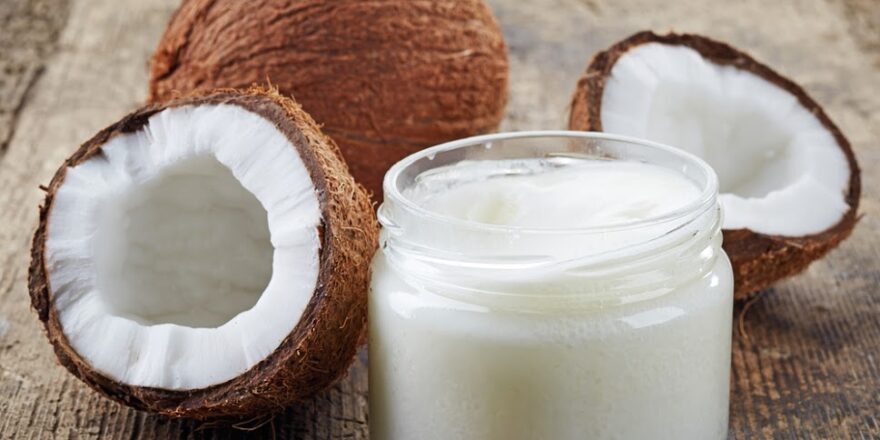
5. Coconut oil – $1.01 per 2,000 calories

Doesn’t that just look delicious?

Coconut oil contains lots of saturated fat – but luckily for the Paleo people out there, there is some evidence that saturated fat might not be as bad as people think. Also, saturated fat is relatively stable at high heat, making coconut oil a good option for high-heat cooking.

6. Pancake mix – $1.06 per 2,000 calories

Pancake + toppings = endless possibilities. Hungry yet?

7. Peanut butter – $1.25 per 2,000 calories

Strangely, in some stores peanut butter is actually cheaper than an equivalent mass of shelled peanuts. We’re not exactly sure why; we have some theories but let us know if you figure it out.

Peanut butter is delicious and may or may not be the single largest source of daily calorie intake for the interns who helped write this article. Try a spoonful with apples, banana, and/or a sprinkle of cinnamon.

8. Whole milk – $1.37 per 2,000 calories

Better value than 2%. Pour me some malk, Josh.

9. Pinto beans – $1.39 per 2,000 calories

Pairs nicely with item #2 (rice).

10. Brownie mix – $1.39 per 2,000 calories

A crucial part of any balanced diet.

11. Spaghetti – $1.49 per 2,000 calories*

*Meatballs and sauce not included.

12. Tortilla chips – $1.59 per 2,000 calories

Suddenly it makes a lot more sense why they give you free chips at Mexican restaurants, doesn’t it?

13. Eggs – $1.61 per 2,000 calories

Some people skip the yolk because of cholesterol content. Others don’t, because there’s a growing consensus that dietary cholesterol is not actually that relevant to the amount of “bad” cholesterol in your body.

14. Potatoes – $1.79 per 2,000 calories

Easy to prepare, hard to live without, endless possibilities… boil ‘em, mash ‘em, stick em in a stew.

15. Top ramen (beef & chicken) – $1.82 per 2,000 calories

This is why we did this: to investigate what’s actually cheap vs. just having a reputation of being cheap. Admittedly ramen is still pretty low cost per calorie, but just think: if you add eggs to your ramen, you’re actually reducing the average cost per calorie of the meal!

Looking for more tips for meals on the cheap? Check out Budget Bytes for some great recipe ideas, and follow us on Twitter for more financial tips and tricks.blog cta-need cash

*This content is general in nature and provided for informational purposes only. This content is not specific to Upstart, except where explicitly stated. This content may contain references to products and services offered through Upstart’s credit marketplace. Upstart is not a financial advisor and does not offer financial planning services.

upstart logo

About the Author

Upstart Content Team

The Upstart Content Team develops educational content grounded in research and real-world financial experiences. By breaking down complex topics into clear, actionable insights, the team helps readers navigate important decisions—so they can feel confident in the money moments that matter.

More resources you may be interested in

How to Get a Home Improvement Loan in 4 Steps
Credit Card Consolidation: Is It Right For Me?
Debt Consolidation Loans: What It Is and How It Works
Paying for a Wedding: Top 5 Financing Options
What Is an Installment Loan and How Does It Work?
Asian old senior workout exercise and doing yoga at home
The Link Between Financial Stress & Your Health
How to Decompress from the Stress of the Holidays

See if Upstart is right for you

Check your rate lock Won't affect your credit score¹

Upstart Network, Inc. (NMLS #936133) is not a lender. All loans on its marketplace are made by regulated financial institutions.

All mortgage lending is conducted by Upstart Mortgage, LLC dba Upstart Home Lending. (NMLS #2443873). Equal Housing Opportunity.

  1. Checking your rate won’t affect your credit score: When you check your rate, we check your credit report. This initial (soft) inquiry will not affect your credit score. If you accept your rate and proceed with your application, we do another (hard) credit inquiry that will impact your credit score. If you take out a loan, repayment information may be reported to the credit bureaus.
  2. Upstart’s model considers education: Neither Upstart nor its lending partners have a minimum educational attainment requirement in order to be eligible for a loan.
  3. 41% more approvals and 33% lower rates than a traditional model: As of publication in April 2026, and based on a comparison between the Upstart model and a hypothetical traditional model using Upstart data from Jan – Dec 2025. For more information on the methodology behind this study, please see Upstart’s Annual Access to Credit results here.
  4. Unsecured Loans: While most loans through Upstart are unsecured, certain lenders may place a lien on other accounts you hold with the same institution. There may be an option to secure your personal loan through Upstart with your vehicle, which will require a lien to be placed on the vehicle. It is important to review your promissory note for these details before accepting your loan.
  5. Loan amounts from $1,000 -$75,000: Your loan amount will be determined based on your credit, income, and certain other information provided in your loan application. Not all applicants will qualify for the full amount. Minimum loan amounts vary by state: GA ($3,100), HI ($1,500), MA ($7,000). Maximum loan amounts may vary by state.
  6. Closing and funding timeline: In April 2026, 10% of funded HELOCs achieved a closing timeline of 2 days or less and a funding timeline of 7 days or less. This timeline assumes consumers close with our remote online notary, provide supporting documentation promptly, and ensure the information provided is accurate and consistent with our verification process. Delays, discrepancies, and other unforeseen factors may impact the closing timeline. MBA’s 2025 Home Lending Study reports an average industry closing time of 37 days.
  7. APRs from 6.2% – 35.99%, with 3 or 5 year terms: The full range of available rates varies by state. The lowest rates are only available to the most qualified applicants. A representative example of payment terms for an unsecured Personal Loan is as follows: a borrower receives a loan of $10,000 for a term of 60 months, with an interest rate of 17.50% and a 7.25% origination fee of $725, for an APR of 21.23%. In this example, the borrower will receive $9275 and will make 60 monthly payments of $252. APR is calculated based on 5-year rates offered in March 2026. There is no downpayment and no prepayment penalty. Your APR will be determined based on your credit, income, and certain other information provided in your loan application. Not all applicants will be approved.
  8. Instant deposits: To receive instant funding, your bank account must support instant transfers. If your account does not support instant transfers, funds will be available to you depending on your bank’s transaction processing time and policies.
  9. Always On Commitment: We are committed to maintaining your credit limit as long as you continue to meet program eligibility and account requirements. To ensure the safety and security of all our members, we reserve the right to adjust or close lines in specific circumstances, including account default or late payments, suspected fraud, violation of our terms of service (including abusive behavior), or when necessitated by legal or regulatory requirements.
  10. Cash Line draws: You may request a draw at any time. Only one draw may be outstanding at a time; after it is fully repaid, you may request another.
  11. HELOC APRs as low as 6.52%: Terms shown here are subject to change without notice. APRs for initial advances range from 6.52% to 18.00% based on rates offered as of April 2026. The lowest rate is only available to consumers willing to become a member of a credit union and to those who meet a minimum FICO score of 780, CLTV under 70%, and DTI under 45%. Your actual rate will depend on many factors such as your credit history, combined loan-to-value ratio (CLTV), line amount, loan term, lien position, and property state. Origination fee to open an account is between 0% and 4.99% of the approved credit limit. The Annual Percentage Rate (“APR”) is variable and based on the Prime Rate as published in the Wall Street Journal “Money Rates” table plus or minus a margin. Your APR will never be less than 3.99% or greater than 18.00%. Property insurance is required.
  12. No annual fee, prepayment penalty, or fees to redraw: Terms shown here are subject to change without notice. Origination fee to open an account is between 0% and 4.99% of the approved credit limit. The Annual Percentage Rate (“APR”) is variable and based on the Prime Rate as published in the Wall Street Journal “Money Rates” table plus or minus a margin. Your APR will never be less than 3.99% or greater than 18.00%. Property insurance is required.
  13. 2,500+ Variables:As of 3/31/2026. “Variables,” often also referred to as “features,” refers to raw variables and combined variables considered in our AI models. A “raw” variable is a non-combined, conceptually distinct unit of data, such as “applicant-reported savings.” A “combined” variable is data that has been transformed, combined, or otherwise engineered from a raw variable or set of raw variables, such as “applicant-reported savings” divided by “loan amount.
  14. Fully automated loans: In Q2 2026. Percentage of Loans Fully Automated, which is defined as the total number of loans in a given period originated end-to-end (from initial rate request to final funding for personal loans and small dollar loans, and from initial rate request to signing of the loan agreement for auto loans) with no human involvement required by the Company divided by the Transaction Volume, Number of Loans in the same period.